

RFID warehouse tracking from dock door to dispatch
RFID warehouse tracking reads the tags on pallets and cartons as they pass a dock door or sit on a rack, so receiving, put-away and dispatch are recorded without anyone scanning by hand. Cyphra Tech supplies the readers and tags, builds the tracking software, and connects it to your ERP and warehouse systems.
 Illustrative image
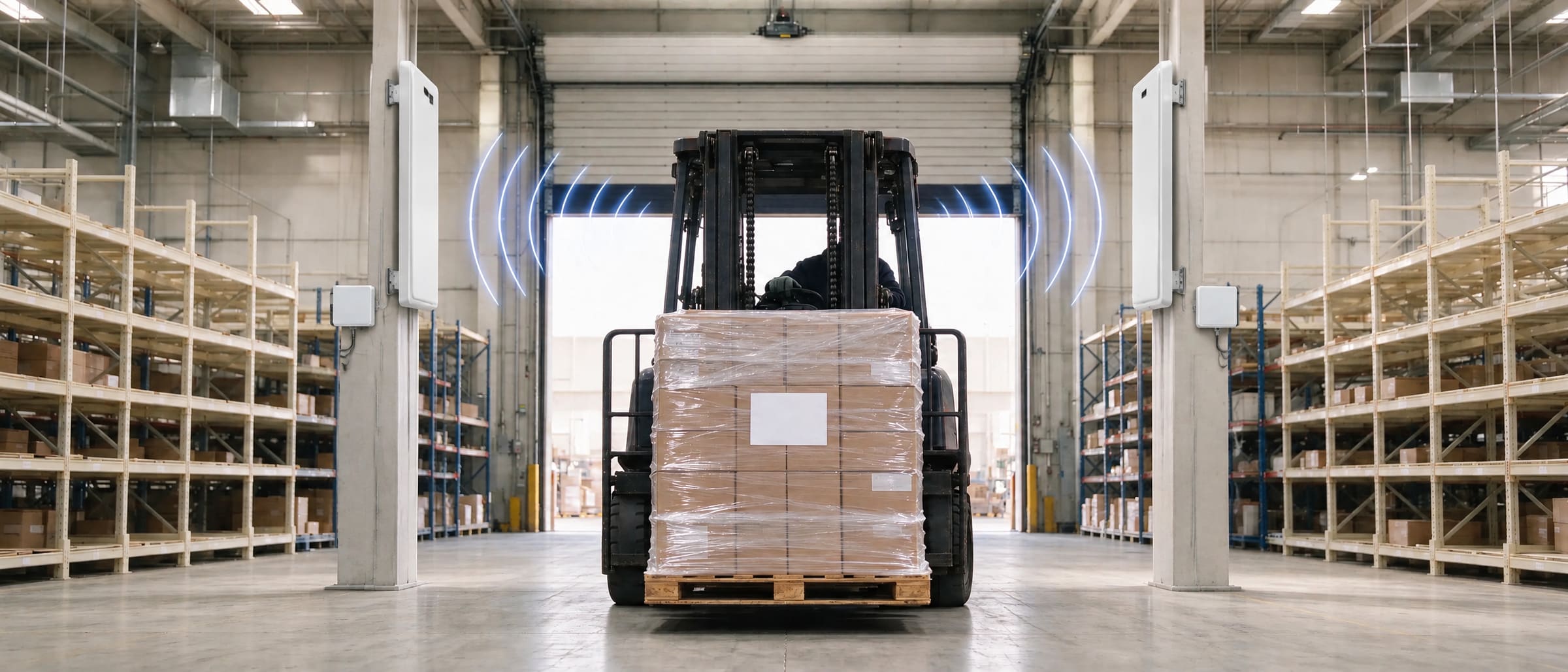
RFID goods receiving at the dock door
 Illustrative image
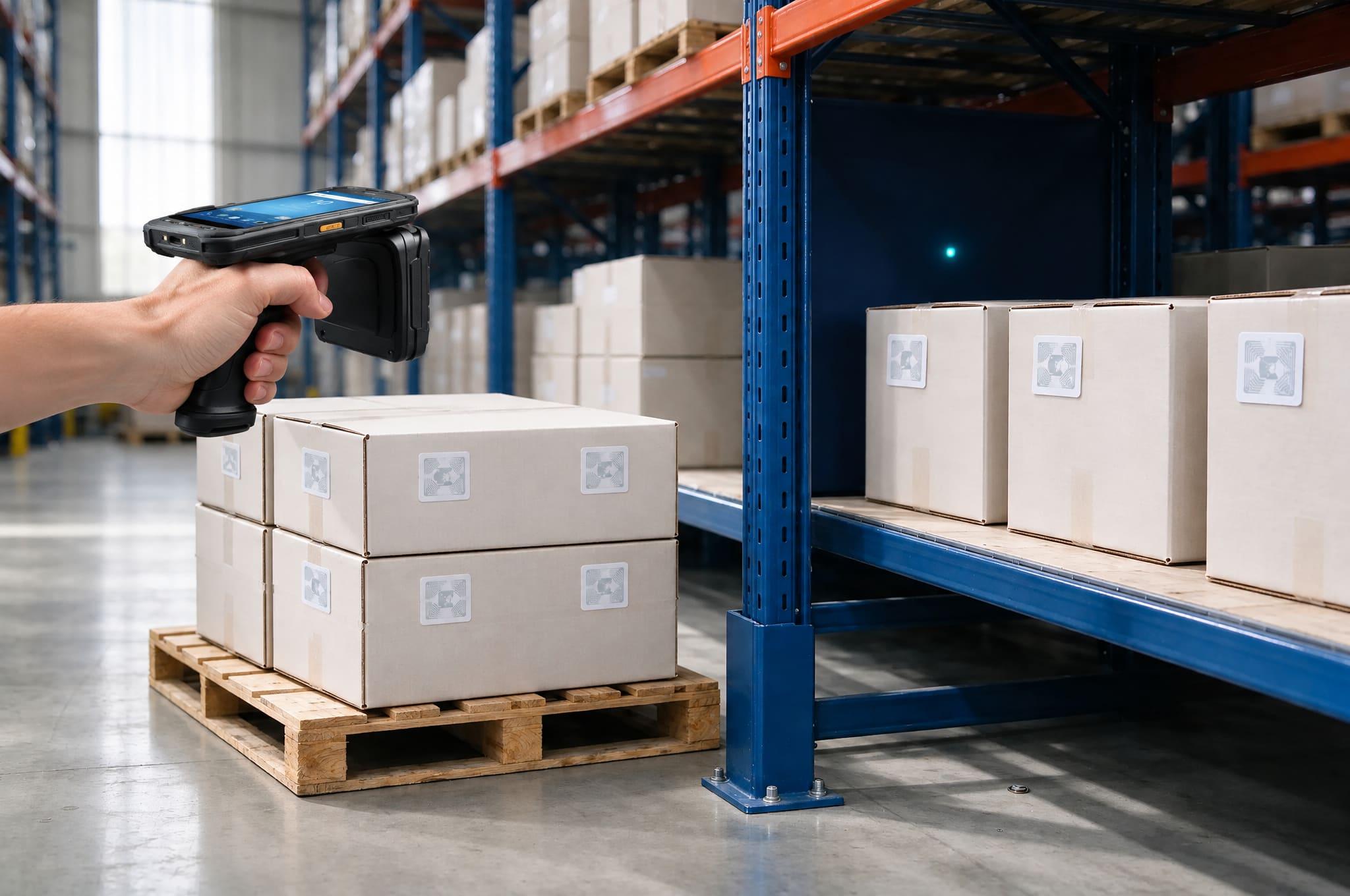
- Tag cartons and pallets at source or when they arrive.
- Read the tags as goods pass the dock-door portal.
- Reconcile the tags read against the order or ERP record.
- Update stock and report any shortage or wrong item.
Where warehouse stock visibility gets lost
- 01
Manual scanning slows receiving and dispatch
Scanning or ticking off every carton at the dock holds up trucks and staff, and a short or wrong delivery is easy to miss when the check is rushed.
- 02
Pallets and cartons on racking are out of sight
Once a pallet is put away, the system only knows the location someone typed in. A pallet in the wrong bay looks the same as one in the right bay until someone goes to look.
- 03
Discrepancies appear only at the periodic count
When stock is checked only a few times a year, errors build up in between. A full count is a heavy job that often stops operations while it runs.
- 04
Metal racks and liquids disturb the reads
Metal and liquids affect radio signals, so reader positions and tag choices cannot be copied from another site. We plan them from a site survey and check them on your own goods.
What we deliver for RFID warehouse inventory
Hardware
Dock-door readers, handhelds and tags for your goods
We supply fixed readers for dock doors, handheld readers for counts, and tags for cartons, pallets and returnable assets, including tags that work on metal surfaces.
Software
Tracking software with event history
Our software turns reads into receiving, put-away and dispatch events, shows where each item is, and flags anything that does not match the order.
Integration
Connection to your ERP and warehouse systems
We connect the events to your ERP and POS system and warehouse systems, so orders and stock records update without re-typing.
Turnkey
One team from site survey to support
We run the project end to end: site survey, proof of concept, installation, training and support.
What we take care of for RFID pallet tracking
| Item | What we do | Why it matters |
|---|---|---|
| Tags | Chosen for cartons, pallets and returnable cages, and tested on your own goods | Each needs a tag that survives handling and still reads. |
| Reader type | Dock-door portal, or handheld reader | A portal reads goods as they pass without staff effort; a handheld suits counts and spot checks on racking. |
| Stock events | Receiving, put-away and dispatch events passed to your ERP and warehouse systems | Records move between systems without re-typing. |
| Regulatory compliance | Equipment approved for use in your country | Rules differ between countries, so equipment is chosen for the country where it runs. |
How a Cyphra RFID project runs
Frequently asked questions about RFID warehouse tracking
How does RFID warehouse tracking work and how do I set it up for a logistics company?
Fixed readers at the dock doors and handhelds on the racking read the tags on cartons and pallets, and the software turns each read into a receiving, put-away or dispatch record. To set it up we survey the site, choose the tags and reader positions, run a proof of concept on your goods, then install, connect to your ERP and train staff.
How much does an RFID warehouse tracking system cost?
The cost depends on how many dock doors and storage areas you cover, how many tags you use, and how the system connects to your ERP. The return depends on how much time receiving checks and counts take today, so we quote after a site survey, not from a price list.
Can RFID warehouse tracking integrate with my ERP and warehouse management system?
Yes, in most cases. Receiving, put-away and dispatch events can be sent to your existing ERP and warehouse systems so stock and order records update from the reads, and we map the systems to connect during the site survey. See how RFID connects to ERP and POS.
RFID vs barcode: which is better for inventory counting?
For counting many cartons or items, RFID is usually faster: a reader picks up many tags at once without a clear line of sight to each one, while a barcode is scanned one at a time. In a 2009 retail study, 10,000 items took 2 hours to scan with RFID and 53 hours with a barcode reader. Those items were apparel, not warehouse stock. See how RFID works.
Do RFID reads work near metal racks and liquids?
Yes, if it is planned for. Metal and liquids weaken or reflect radio signals, so we choose tags made for those surfaces, place readers after a site survey, and check the reads on your own goods before roll-out.
Should I use dock-door portals or handheld readers?
Many warehouses use both. A dock-door portal records goods automatically as they pass, which suits busy receiving and dispatch doors, while a handheld reader suits cycle counts, put-away checks and finding a pallet on the racking.
Can RFID track returnable pallets, cages and other assets?
Yes. Reusable pallets, cages and tools can carry a durable tag, ideally one made for metal surfaces, and be read at the dock and in the yard. You see where they are and how long they have been out. See RFID for assets and access control.
Talk to us about RFID for your business
Tell us your industry and the items you need to track. We reply with the tags and readers that fit.