

RFID and ERP integration: how stock counts reach your system
RFID tags and readers produce reads, and your ERP needs stock counts. Middleware turns the first into the second, and the ERP or POS keeps the item record and issues invoices. This guide explains that path, where ZATCA e-invoicing sits in it, what data to send, and the decisions to make before you integrate.
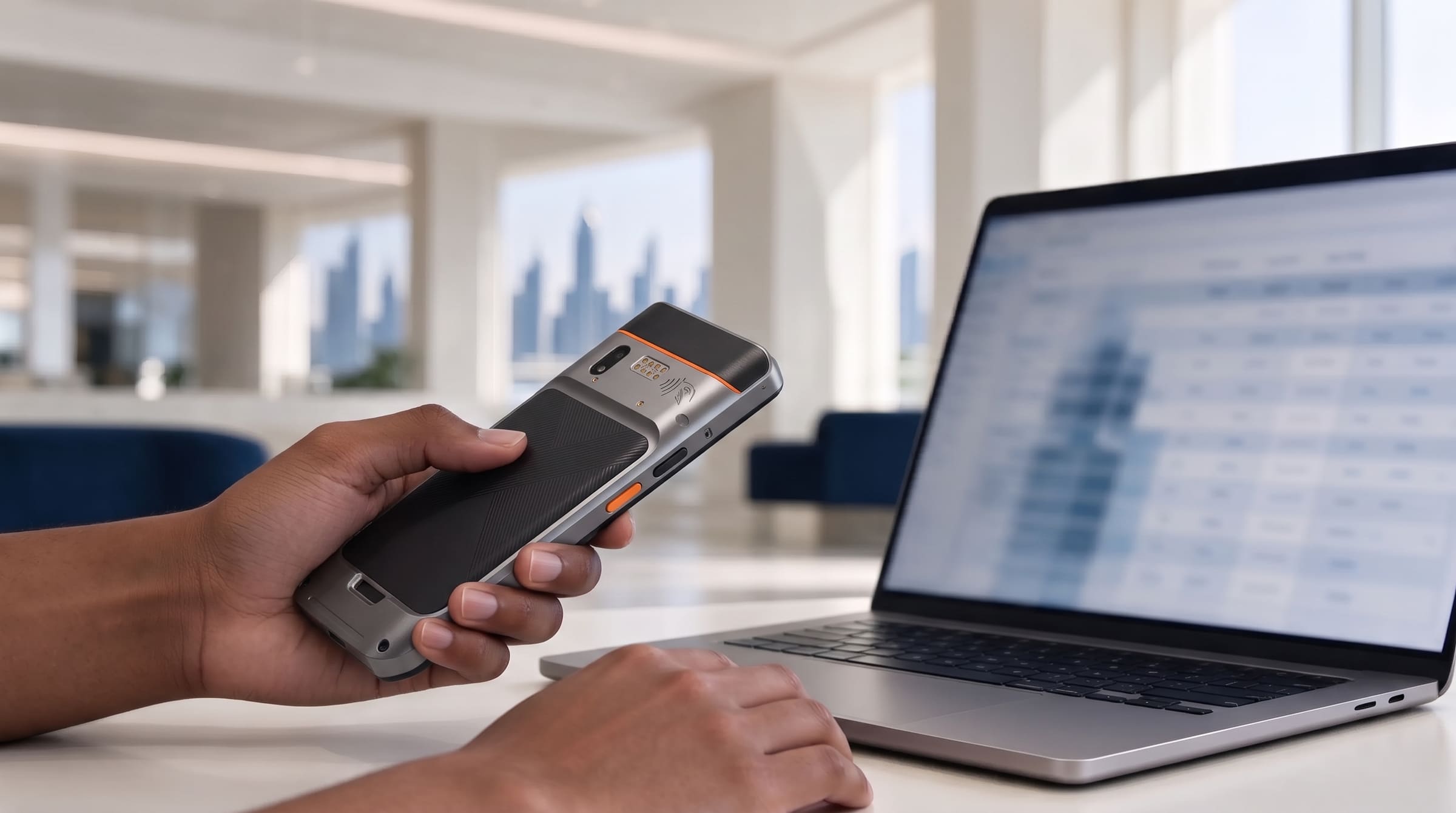
How do RFID stock counts reach an ERP?
In most projects an RFID system does not talk to the ERP directly. Tags carry an identifier, readers pick those identifiers up at a shelf, a door or a counter, and software turns many raw reads into what the ERP understands: how many of each item are where. The ERP then updates its stock record. The steps are easy to name and easy to under-plan, which is why this guide starts with the path before it gets to the data.
The identifier is the first link in that path. The GS1 EPC Tag Data Standard defines the Electronic Product Code and specifies the memory contents of Gen 2 RFID tags, and its SGTIN scheme assigns a unique identity to an instance of a trade item, such as a specific instance of a product or SKU (GS1 EPC Tag Data Standard, Release 2.3, 2025). That identity is what your ERP or POS can match to its own item record, so a stock count can be built by counting how many identities of one item were seen.
A single read says only that a tag was seen, by which reader and when. A count is built from many reads, so someone has to decide when a count starts and where it ends: a stocktake of one shelf, a crossing at a door, or a sale at the counter. The ERP should receive the result of that decision, not the raw stream of reads.
For the Cyphra view of this path, see the ERP and POS integration page, and for how tags, readers, middleware and software fit together, see how RFID works.
What does middleware do between readers and the ERP?
Middleware is the software layer between the readers and the business system. A reader can see the same tag many times, and it can see tags you did not mean to count, such as items on the next shelf or stock on a passing trolley. Middleware is where reads are filtered, grouped and turned into events and counts before anything reaches the ERP. It removes duplicate reads, turns raw reads into counts and movements, and forwards them to the ERP or POS in a form those systems accept.
One open way to describe those events is EPCIS. GS1 states that the goal of EPCIS is to enable disparate applications to create and share visibility event data, both within and across enterprises (GS1 EPCIS Standard, Release 2.0, 2022). The standard describes each event along five dimensions, which it summarises as what, when, where, why and how: the objects involved, the date and time, the location, the business context and the condition of the objects. Those five map well onto what an ERP wants to know about a stock movement.
Not every ERP reads EPCIS directly, so middleware is usually also the translation step. It takes events in one format and sends them in the form your ERP accepts, whether that is a file, a message or a call to the ERP's own interface. Ask early which of those your ERP supports, because that answer shapes the rest of the design.
How does this fit with ZATCA e-invoicing?
ZATCA describes electronic invoicing as a procedure that aims to convert the issuing of paper invoices and notes into an electronic process that allows the exchange and processing of invoices, credit notes and debit notes in a structured electronic format between buyer and seller through an integrated electronic solution (ZATCA, E-Invoicing (Fatoorah) page, 2026). That is the work of the invoicing system, which in a Cyphra project is the ERP or POS.
Put plainly: Cyphra's ERP and POS handle ZATCA e-invoicing. RFID updates your stock; it is not itself a ZATCA system.
So the design question is a hand-off. RFID gives the ERP or POS accurate stock, and the invoicing system issues the invoice. A tag or a reader does not issue an invoice, and this article does not describe either one as meeting any ZATCA requirement. For what your invoicing system must do, read ZATCA's own pages and ask your invoicing provider.
What data should the ERP receive?
Send the ERP results it can act on, not noise. The Tag Data Standard describes the EPC as a universal identifier that provides a unique identity for any physical object, expressly intended for use by business applications (GS1 EPC Tag Data Standard, Release 2.3, 2025). In practice, a useful message answers the same questions the EPCIS dimensions ask:
- Which item: the item identity from the tag, mapped to the SKU in the ERP item record.
- Where: the shelf, room, door or store where the read or the count happened.
- When: the time of the count or the movement, so the ERP can order events correctly.
- What happened: counted, moved, received or sold, because each one changes the stock record differently.
- How many: the quantity per SKU, with a reference to the count session so a total can be traced back.
Whether the ERP also stores the full list of identities behind each count is a design choice. Many projects keep only the quantity per SKU in the ERP and leave the identity-level detail in the middleware. Decide that early, because it changes how much data moves and how an exception is investigated.
What should you decide before you integrate?
Most integration problems come from questions nobody answered before the readers were installed. Settle these with your ERP owner first:
- Which system holds the master item record, the ERP or the POS, and who may change it.
- How the item identities on the tags map to your SKUs, and who maintains that mapping when new items arrive.
- How often counts should sync: after each count, on a schedule, or at the end of the day.
- Which events matter to the ERP: counts only, or also movements, receipts and sales.
- What happens when an RFID count and the ERP disagree, and who investigates and corrects it.
- Which system issues the invoice, which in the Cyphra model is the ERP or POS and not the RFID layer.
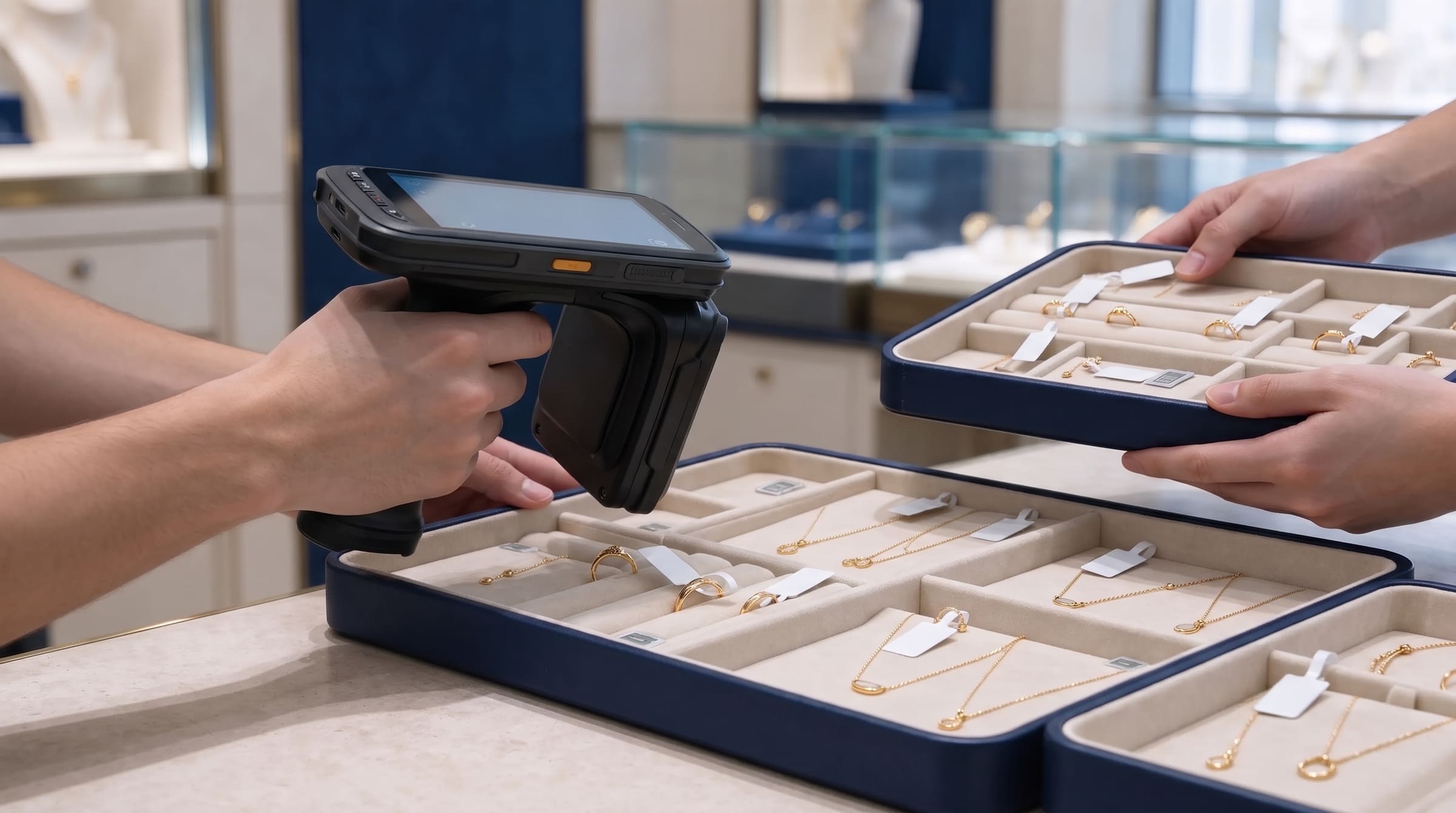
GS1 treats barcodes and RFID as data carriers that can be combined with electronic messaging such as EDI and EPCIS to reach the greatest possible interoperability (GS1 Australia, EPC/RFID, 2026), which is a good reason to keep your item identifiers consistent across both. For a worked example of a stock process in a specific industry, read the RFID jewelry inventory guide, and for the parts of an RFID system see how RFID works.
Sources
Frequently asked questions about RFID and ERP integration
Does RFID replace my ERP?
No. RFID produces reads that middleware turns into counts. The ERP or POS keeps the item record, updates stock and handles the sale and the invoice.
Is RFID itself a ZATCA system?
No. Cyphra's ERP and POS handle ZATCA e-invoicing. RFID updates your stock; it is not itself a ZATCA system.
What is EPCIS and do I need it?
GS1 describes EPCIS as a standard whose goal is to enable disparate applications to create and share visibility event data, both within and across enterprises (GS1 EPCIS Standard, Release 2.0, 2022). Whether you need it depends on whether your ERP or your partners read it; middleware can translate if they do not.
Does every ERP read RFID data directly?
Not every ERP does. Middleware is usually the step that translates events into the form your ERP accepts, so ask early which interface your ERP supports.
Where to go next
Talk to us about RFID for your business
Tell us your industry and the items you need to track. We reply with the tags and readers that fit.